
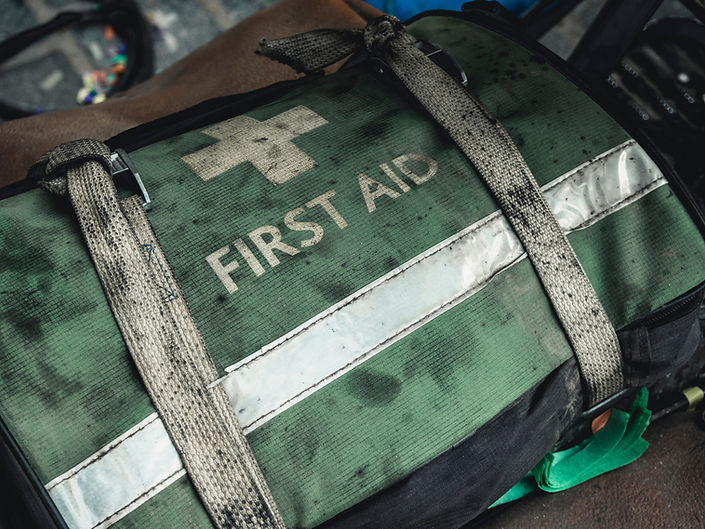
Introduction to First Aid
Introduction to First Aid provides learners with the essential knowledge and practical skills needed to respond confidently to common injuries and sudden illnesses. This course establishes a strong foundation in emergency care by teaching scene safety, basic patient assessment, and simple yet effective life-saving techniques. Learners gain the ability to stabilise a casualty, manage everyday workplace and home emergencies, and take the correct first steps until advanced medical assistance arrives.
Basic Course Information
Course Duration
1 Day
Price
R900
Location
On site / Your Location
Accredited
No
US ID
N/A
Accredited Through
N/A
Certificate
Yes
Certificate Expiration
3 Years
Entry Requirements
None
Detailed Course breakdown
Foundations of First Aid & Legal Responsibilities
What first aid is, why it matters, and how to act safely and legally.
-
Definition and goals of first aid
-
Preserving life, preventing further harm, and promoting recovery
-
Ethical and legal principles: consent, implied consent, minors, mentally ill patients
-
Duty to care, reasonable skill and care, negligence, and abandonment
-
Importance of calm, controlled behavior during emergencies
First Aid Readiness & Essential Equipment
Understanding and using basic first aid tools confidently.
-
Contents and purpose of a standard first aid kit
-
When and how to use items such as bandages, gauze, tape, gloves, antiseptics, splints, cold/heat packs, and emergency blankets
-
Introduction to specialized items: Burnshield, CPR masks, SAM splints, eyewash, triangular bandages
-
Safe storage, inspection, and maintenance of first aid supplies
Safety Principles in Emergency Situations
Ensuring the scene, responder, and casualty remain safe at all times.
-
The 4 Safety S’s: Scene, Self, Casualty, and Equipment safety
-
Non-negotiable safety rules
-
Safe decision-making under pressure
-
When not to move a casualty
-
Avoiding common first aid mistakes (e.g., offering food or drinks, leaving a casualty unattended)
Triage & Emergency Prioritization
Recognising critical conditions and prioritising care.
-
Colour-coding system: Red, Yellow, Green, Black
-
Identifying life-threatening injuries
-
Understanding the Golden Hour and time-critical emergencies
SCAB Framework & Scene Survey
A structured, step-by-step approach to any emergency.
-
SCAB: Safety, Circulation, Airway, Breathing
-
Scene survey and mechanism of injury
-
Identifying hazards and controlling risk
-
HELLO principle: Identify yourself, obtain consent, assess what happened
-
Calling for HELP: what to say to dispatchers and key information to give
Primary Survey (CAB) – Life-Threatening Emergencies
Recognising and responding to the most critical conditions first.
-
Circulation: Pulse check, identifying cardiac arrest
-
Airway: Head-tilt-chin-lift, jaw-thrust for suspected spinal injury
-
Breathing: Look-Listen-Feel assessment
-
When and how to begin CPR
Cardiopulmonary Resuscitation (CPR)
Life-saving procedures for adults, children, and infants.
-
Definition and principles of CPR
-
Compression depth, rate, and ratios
-
Rescue breathing techniques
-
CPR sequence: Hazard, Hello, Help, CAB
-
Use of CPR shields and protective barriers
Choking Management (Adults, Children, Infants)
Recognising airway obstruction and responding correctly.
-
Signs and symptoms of choking
-
Conscious casualty management: coughing, back blows, abdominal/chest thrusts
-
Unconscious casualty management
-
Infant choking procedures (back blows + chest thrusts)
Secondary Survey (Head-to-Toe Assessment)
Identifying further injuries when life-threats have been addressed.
-
Detailed assessment of the head, neck, chest, abdomen, pelvis, back, limbs
-
Use of SAMPLE and AVPU scales
-
Recognising subtle injuries and warning signs
-
When secondary surveys should and should not be performed
Bleeding & Wound Management
Recognising and controlling different types of bleeding.
-
Capillary, venous, and arterial bleeding
-
Steps for external bleeding control
-
Pressure, elevation, and pressure points
-
Nosebleed management
-
Early recognition of internal bleeding
Fractures & Immobilisation Basics
Understanding and stabilising suspected broken bones.
-
Types of fractures and common signs
-
Open vs closed fractures
-
Splinting principles
-
When to seek immediate medical help
Burns – Recognition & First Aid
Managing burns from minor to severe.
-
First-, second-, third-, and fourth-degree burns
-
Cooling and dressing techniques
-
When to use Burnshield or sterile dressings
-
Burns requiring urgent evacuation
Seizures & Epileptic Emergencies
Recognising seizure activity and protecting the casualty safely.
-
Types of seizures
-
What a first aider should and should NOT do
-
When to call emergency services
-
Post-seizure (post-ictal) care
Shock – Identification & Immediate Care
Preventing deterioration in casualties with circulatory compromise.
-
Stages of shock and their signs
-
Shock positioning
-
Maintaining warmth and airway
-
Prohibited actions (e.g., giving food or drink)
Recovery Position & Ongoing Casualty Care
Maintaining safety after initial treatment.
-
When and how to use the recovery position correctly
-
Protecting the airway
-
Monitoring vital signs every 10 minutes
-
Preparing for EMS handover
-
Recording and reporting what happened
By the End of this Programme, Learners Will Be Able To:
-
Respond calmly and safely to common injuries and sudden illnesses
-
Assess emergency scenes using SCAB, HELLO, and the Primary & Secondary Surveys
-
Provide basic life-support interventions such as CPR and choking management
-
Control bleeding, manage burns, stabilise fractures, and assist casualties experiencing shock or seizures
-
Use essential first aid equipment confidently and appropriately
-
Protect themselves and others by applying legal, ethical, and safety principles
-
Monitor casualties and maintain care until emergency services take over
This course provides a strong foundation in essential first aid skills and prepares learners to act responsibly and effectively in a wide range of everyday emergencies.